
Daily Scrum - Learn Scrum

Scrum Framework Library - Daily Scrum

What is the purpose of the Daily Scrum?

The purpose of the Daily Scrum is to provide a daily opportunity for the Development Team to synchronize, plan their work, and identify any potential obstacles.

The Daily Scrum, also known as the daily stand-up, is a short time-boxed meeting held every day in Scrum. Its purpose is to facilitate communication, coordination, and collaboration within the Development Team. The Daily Scrum allows team members to share updates on their progress, discuss any challenges they are facing, and plan their work for the day. It helps to ensure transparency, alignment, and adaptability within the team.

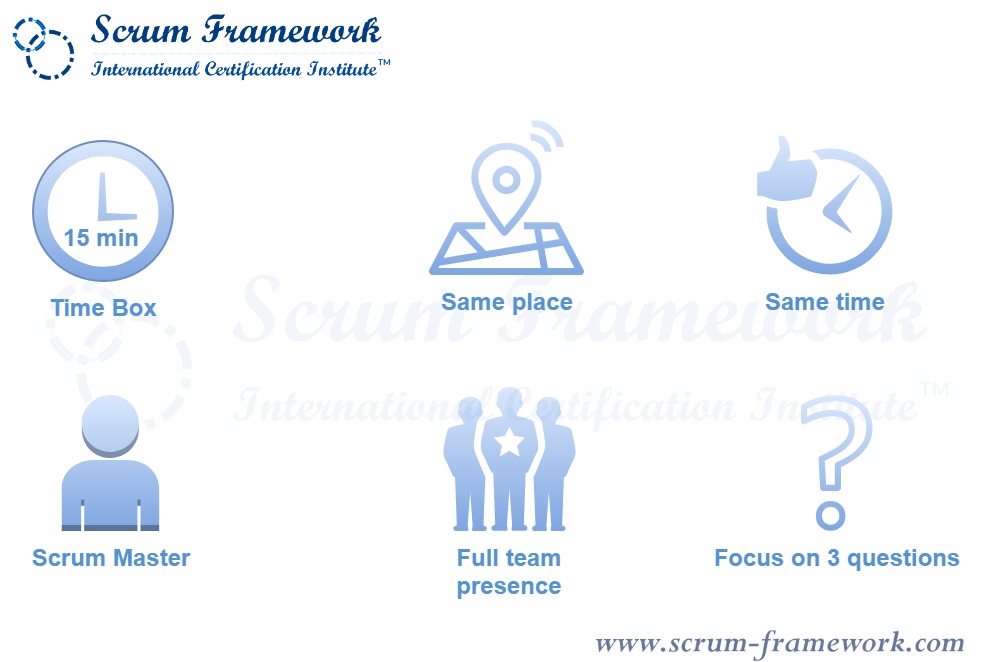
The Daily Scrum typically addresses three questions: What did you do yesterday? What will you do today? Are there any obstacles or impediments?

During the Daily Scrum, team members typically answer the following three questions:
1. What did you do yesterday? Each team member shares a brief update on the work they completed since the last Daily Scrum.
2. What will you do today? Each team member discusses their planned tasks and activities for the current day.
2. Are there any obstacles or impediments? Team members highlight any challenges or blockers that may hinder their progress or require assistance from the team.

These questions help team members synchronize their efforts, identify potential issues, and foster a shared understanding of the current status of the work.

The Daily Scrum should typically last around 15 minutes.

The Daily Scrum is designed to be a short and focused meeting. It is recommended to keep the duration to around 15 minutes or less, regardless of the team size. This time constraint encourages brevity and encourages team members to provide concise updates. By keeping the Daily Scrum short, it ensures that the team's valuable time is used efficiently and that the meeting remains focused on the essential updates and coordination needed for the day.

Some best practices for conducting effective Daily Scrums include keeping it time-boxed, standing up, focusing on the three questions, and fostering active listening and collaboration.

Here are some best practices for conducting effective Daily Scrums:
- Keep it time-boxed: Stick to the allotted time, typically 15 minutes or less, to maintain focus and efficiency.
- Stand up: Conduct the meeting with team members standing to encourage brevity and keep the energy high.
- Focus on the three questions: Ensure that each team member addresses the questions: What did you do yesterday? What will you do today? Are there any obstacles or impediments?
- Foster active listening and collaboration: Encourage team members to actively listen and engage in supportive discussions. Avoid side conversations and distractions.
- Use visual aids: Utilize visual boards or digital tools to provide a shared understanding of the work progress and make it easier to identify dependencies and blockers.
- Adapt as needed: Continually assess the effectiveness of the Daily Scrum and make adjustments to improve its value to the team.

By following these best practices, teams can conduct Daily Scrums that promote effective communication, collaboration, and progress towards the Sprint Goal.

The Daily Scrum promotes team collaboration and self-organization by fostering transparency, shared understanding, and collective problem-solving.

The Daily Scrum plays a significant role in team collaboration and self-organization. It provides a regular opportunity for team members to share updates, synchronize their efforts, and identify any obstacles. By sharing their work and plans, team members gain visibility into each other's progress, fostering transparency and a shared understanding of the work being done. This promotes collaboration as team members can identify dependencies, offer assistance, and align their efforts towards the Sprint Goal.

The Daily Scrum also encourages self-organization within the team. By discussing their plans and challenges, team members can collectively problem-solve and make decisions on how to tackle obstacles. It empowers team members to take ownership of their work, make adjustments, and adapt their plans accordingly. The Daily Scrum reinforces the principles of trust, autonomy, and accountability, which are essential for self-organization within an Agile team.

Ready to validate your Scrum knowledge?

100% online exams · 5 attempts · lifetime certificate · no mandatory training