
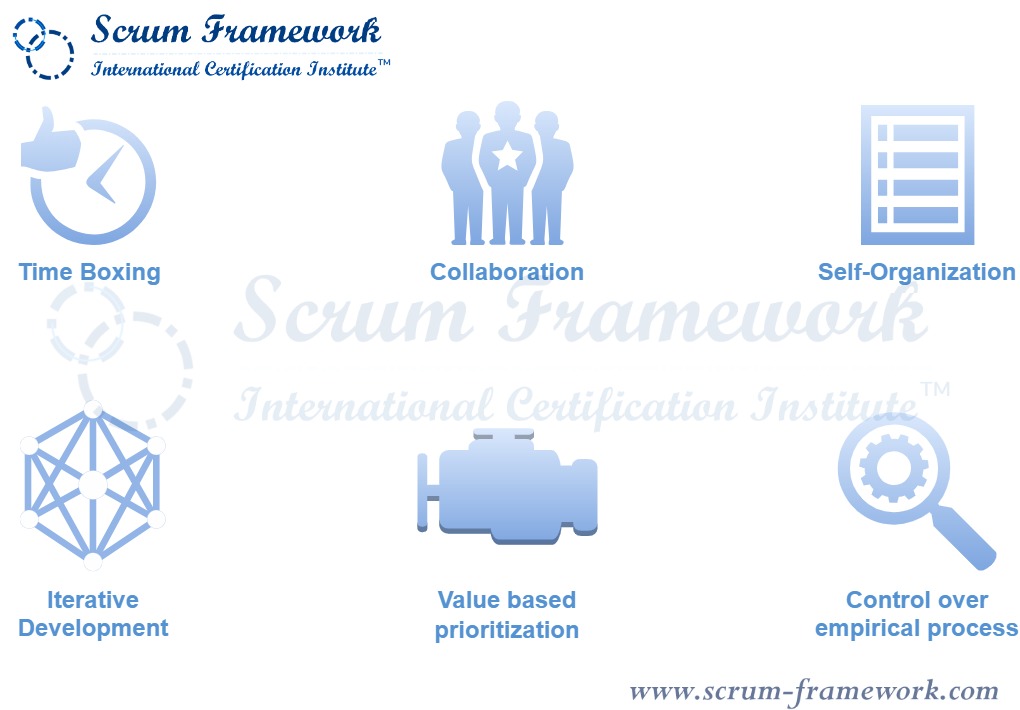
Scrum aligns with the Agile Manifesto and its values by emphasizing customer collaboration, responding to change, delivering working software frequently, and promoting self-organizing teams.
Scrum is an Agile framework that aligns with the values expressed in the Agile Manifesto.
The Agile Manifesto values are:
- Individuals and interactions over processes and tools
- Working software over comprehensive documentation
- Customer collaboration over contract negotiation
- Responding to change over following a plan
Scrum aligns with these values in the following ways:
- Individuals and interactions: Scrum recognizes the importance of effective communication, collaboration, and self-organizing teams. It emphasizes face-to-face interactions through ceremonies like Daily Scrums, Sprint Planning, and Retrospectives.
- Working software: Scrum focuses on delivering working software in short iterations called Sprints. It prioritizes the creation of a potentially shippable product increment at the end of each Sprint, allowing for early and frequent feedback from customers and stakeholders.
- Customer collaboration: Scrum promotes collaboration between the development team and the customer or product owner. The product owner actively engages with the team to provide feedback, refine requirements, and prioritize work through backlog refinement and Sprint Reviews.
- Responding to change: Scrum embraces change as a natural part of the development process. The iterative nature of Scrum allows for regular inspection and adaptation, enabling teams to respond to changing requirements, feedback, and market conditions.
By emphasizing these values, Scrum provides a framework that enables teams to be more responsive, collaborative, and focused on delivering value to customers.
The Agile Manifesto values are:
- Individuals and interactions over processes and tools
- Working software over comprehensive documentation
- Customer collaboration over contract negotiation
- Responding to change over following a plan
Scrum aligns with these values in the following ways:
- Individuals and interactions: Scrum recognizes the importance of effective communication, collaboration, and self-organizing teams. It emphasizes face-to-face interactions through ceremonies like Daily Scrums, Sprint Planning, and Retrospectives.
- Working software: Scrum focuses on delivering working software in short iterations called Sprints. It prioritizes the creation of a potentially shippable product increment at the end of each Sprint, allowing for early and frequent feedback from customers and stakeholders.
- Customer collaboration: Scrum promotes collaboration between the development team and the customer or product owner. The product owner actively engages with the team to provide feedback, refine requirements, and prioritize work through backlog refinement and Sprint Reviews.
- Responding to change: Scrum embraces change as a natural part of the development process. The iterative nature of Scrum allows for regular inspection and adaptation, enabling teams to respond to changing requirements, feedback, and market conditions.
By emphasizing these values, Scrum provides a framework that enables teams to be more responsive, collaborative, and focused on delivering value to customers.