
Sprint Retrospective - Learn Scrum

Scrum Framework Library - Sprint Retrospective

What is the purpose of the Sprint Retrospective?

The purpose of the Sprint Retrospective is to reflect on the previous Sprint, identify areas of improvement, and create a plan for implementing those improvements in the next Sprint.

The Sprint Retrospective is a dedicated meeting held at the end of each Sprint in Scrum. Its purpose is to provide the Scrum Team with an opportunity to reflect on the previous Sprint and identify areas of improvement. The retrospective aims to foster a culture of continuous improvement by examining what went well, what could be improved, and how to adapt practices and processes for better outcomes in the future. The focus is on learning from past experiences and making actionable changes to enhance team performance and effectiveness.
The Sprint Retrospective is a meeting focused on the process and teamwork, where the Scrum Team reflects on their collaboration and identifies areas of improvement. It differs from other meetings like the Daily Scrum and Sprint Review, which focus on progress updates and product feedback, respectively.

The Sprint Retrospective is different from other Scrum meetings in the following ways:
- Focus: The Sprint Retrospective primarily focuses on the process, teamwork, and collaboration within the Scrum Team. It aims to improve how the team works together and identifies areas of improvement in their practices and processes. In contrast, the Daily Scrum focuses on daily progress updates, and the Sprint Review focuses on reviewing the product Increment and gathering feedback from stakeholders.
- Time frame: The Sprint Retrospective occurs at the end of each Sprint and typically takes place after the Sprint Review. In contrast, the Daily Scrum occurs daily throughout the Sprint, and the Sprint Review occurs at the end of the Sprint but before the Retrospective.
- Attendees: The Sprint Retrospective involves the Scrum Team, including the Product Owner, Scrum Master, and Development Team members. It is an internal meeting for the team to reflect and improve. In contrast, the Sprint Review involves stakeholders and external parties interested in the product's development.

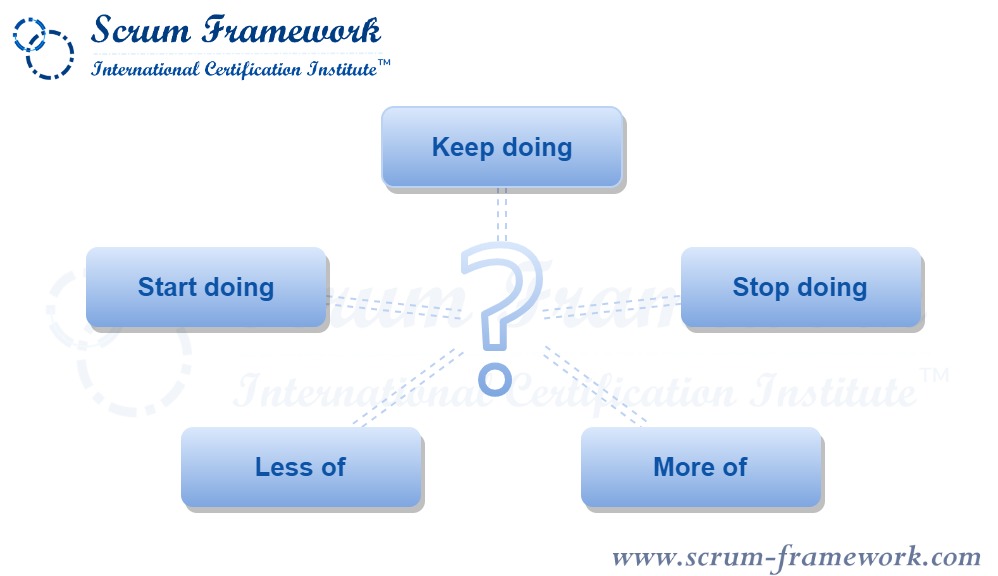
Techniques such as the "Start, Stop, Continue," "Mad, Sad, Glad," or "What Went Well, What Could Be Improved" can be used to facilitate open and honest discussions during the retrospective.

To facilitate open and honest discussions during the Sprint Retrospective, various techniques can be employed. Some common techniques include:
- Start, Stop, Continue: Team members discuss what actions or practices they should start doing, stop doing, or continue doing in the next Sprint to improve their performance.
- Mad, Sad, Glad: Participants express their frustrations, concerns, positive experiences, and areas of happiness during the Sprint. This technique encourages open sharing of emotions and experiences.
- What Went Well, What Could Be Improved: Team members reflect on what went well during the Sprint and what could be improved in terms of processes, communication, collaboration, or any other aspect of their work.
- Four L's: Team members identify what they liked, learned, lacked, and longed for during the Sprint. This technique encourages a comprehensive assessment of the Sprint experience.

These techniques create a structured and safe environment for team members to share their perspectives, provide feedback, and contribute to the retrospective discussion.

Improvement actions are identified and prioritized during the retrospective through collaborative discussions, dot voting, or consensus-based decision-making.

Improvement actions are identified and prioritized during the Sprint Retrospective through the following methods:
- Collaborative discussions: The Scrum Team engages in open discussions to identify areas of improvement based on their observations, experiences, and feedback. They collectively brainstorm potential actions to address those areas.
- Dot voting: The team members are given a limited number of votes (represented by dots or stickers) to allocate to the improvement actions they consider most valuable. This voting process helps prioritize the identified actions based on the team's collective preferences.
- Consensus-based decision-making: The team engages in discussions to reach a consensus on which improvement actions to prioritize. This approach encourages active participation, dialogue, and shared decision-making to ensure buy-in from all team members.

By using these methods, the Scrum Team can collaboratively identify improvement actions and prioritize them based on their collective agreement and perceived value.

The Sprint Retrospective contributes to continuous improvement by providing a dedicated space for the Scrum Team to reflect on their work, identify areas of improvement, and implement changes in subsequent Sprints.

The Sprint Retrospective plays a crucial role in fostering a culture of continuous improvement within the Scrum Team.
It contributes to continuous improvement in the following ways:
- Reflection: The retrospective encouragesthe Scrum Team to reflect on their work, processes, and interactions during the Sprint. This reflection allows them to identify what worked well and what could be improved.
- Identification of improvement areas: Through open and honest discussions, the team identifies areas that need improvement. They may identify bottlenecks, communication issues, process inefficiencies, or any other factors impacting their performance.
- Actionable changes: The retrospective helps the team generate concrete improvement actions that can be implemented in subsequent Sprints. These actions are based on the identified improvement areas and aim to address the challenges and capitalize on the successes of the previous Sprint.
- Iterative learning: By conducting retrospectives at the end of each Sprint, the team continually learns from their experiences and applies those learnings in subsequent Sprints. This iterative process of reflection, action, and adjustment contributes to ongoing improvement and growth.
- Team collaboration and ownership: The retrospective fosters a collaborative environment where team members actively participate in discussions, share their perspectives, and take ownership of the improvement process. This collaboration strengthens the team's cohesion and empowers them to make meaningful changes.
- Adaptation and agility: The retrospective enables the Scrum Team to adapt and refine their processes based on changing circumstances, feedback, and evolving requirements. This adaptability contributes to the team's agility and their ability to deliver value more effectively.

Overall, the Sprint Retrospective is a key mechanism for continuous improvement in Scrum, ensuring that the team continually learns, adapts, and enhances their performance over time.