
Sprint Planning - Learn Scrum

Scrum Framework Library - Sprint Planning

What is the purpose of the Sprint Planning meeting?

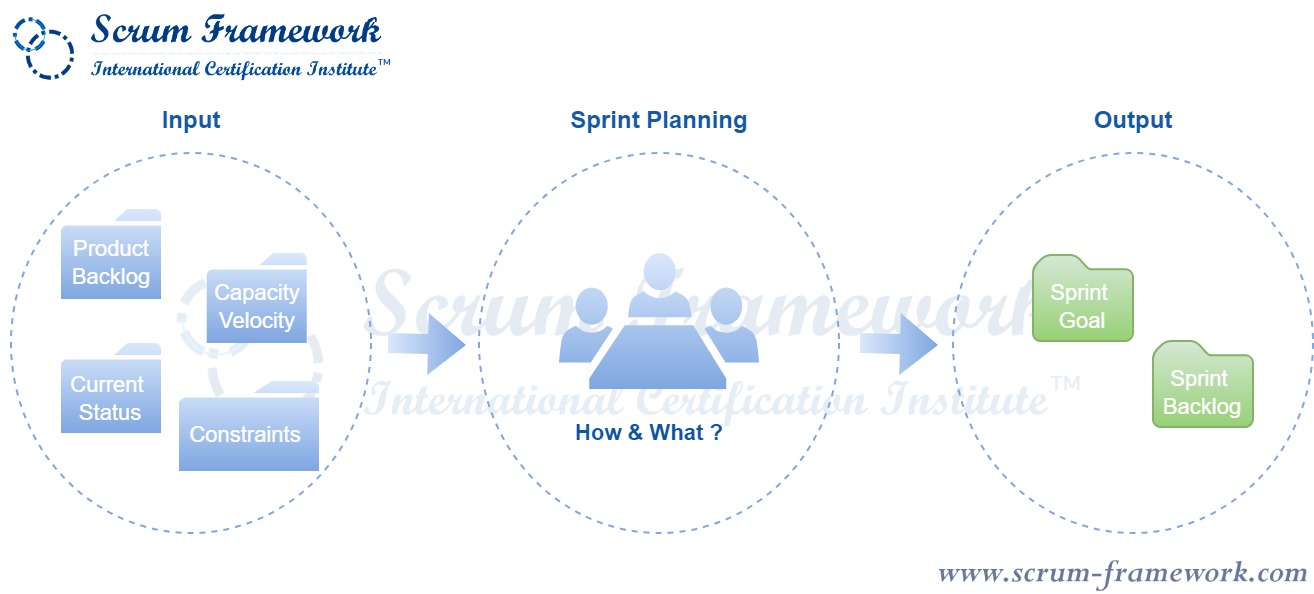
The purpose of the Sprint Planning meeting is to determine which Product Backlog items will be worked on during the upcoming Sprint and to define a plan for accomplishing them.

The Sprint Planning meeting is a time-boxed event in Scrum where the Product Owner, Scrum Master, and Development Team collaborate to determine the work that will be undertaken during the Sprint. The meeting's purpose is to select the Product Backlog items that will be part of the Sprint Backlog and create a plan for achieving the Sprint Goal. It involves discussions about the user stories, understanding the requirements, estimating effort, and breaking down work into actionable tasks.
The Product Owner collaborates with the Development Team during Sprint Planning by clarifying requirements, answering questions, and providing insights into the Product Backlog items.

During Sprint Planning, the Product Owner and the Development Team collaborate closely. The Product Owner presents the Product Backlog items and their priorities to the Development Team. They clarify the requirements, answer questions, and provide additional information to ensure a shared understanding. The Development Team may seek clarification on user stories, request further details, or discuss potential technical approaches. This collaboration helps the team gain clarity and align their understanding of the work to be done.

The Sprint Goal is defined and communicated during the Sprint Planning meeting to provide a clear objective and focus for the Development Team's work.

The Sprint Goal is a short, concise statement that describes the purpose or objective of the Sprint. It provides guidance and a unifying direction for the Development Team. During Sprint Planning, the Product Owner and the Development Team collaborate to define the Sprint Goal based on the selected Product Backlog items. The Sprint Goal is then communicated to the entire Scrum Team to ensure everyone understands the intended outcome of the Sprint.

Factors to consider when selecting items from the Product Backlog for the Sprint include priority, value, dependencies, capacity, and the Sprint Goal.

When selecting items from the Product Backlog for the Sprint, several factors should be considered:
- Priority and value: Select items that align with the overall product vision and have high business value.
- Dependencies: Consider dependencies between user stories and ensure that the necessary prerequisites are met.
- Capacity: Take into account the Development Team's capacity and their ability to complete the selected items within the Sprint timeframe.
- Sprint Goal: Ensure that the selected items contribute to achieving the Sprint Goal and provide a coherent focus for the Sprint.

By considering these factors, the Product Owner and the Development Team can make informed decisions when selecting items from the Product Backlog for the Sprint.

During Sprint Planning, the Development Team divides the selected Product Backlog items into smaller tasks and estimates the effort required for each task.

In Sprint Planning, the Development Team collaboratively breaks down the selected Product Backlog items into smaller, actionable tasks. These tasks represent the work required to complete the user stories. The team discusses and identifies the specific steps, activities, and technical considerations needed to accomplish each task.

Once the tasks are defined, the team estimates the effort or relative complexity of each task. Common estimation techniques include story points, planning poker, or other methods that the team finds effective. Estimating effort helps the team gauge the amount of work involved and assists in capacity planning and tracking progress during the Sprint.

By dividing the work into tasks and estimating effort, the Development Team gains a clear understanding of what needs to be done and can create a realistic plan for achieving the Sprint Goal.