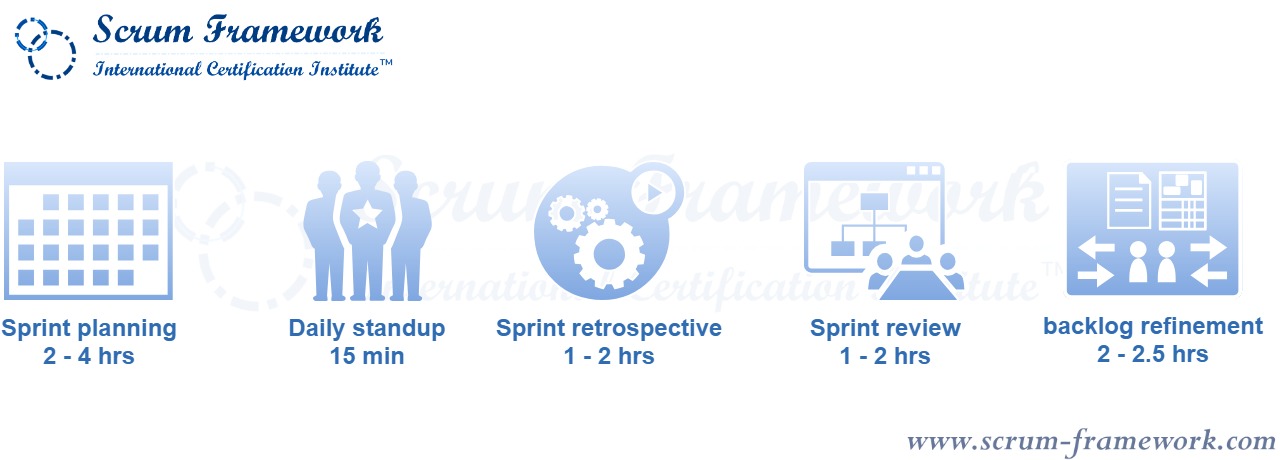
Timeboxing is a technique that sets fixed time durations for meetings and activities in Scrum. It is important in Scrum because it helps create a sense of urgency, promotes focus, ensures regular cadence, and fosters effective time management.
Timeboxing is a technique used in Scrum to allocate fixed time durations for meetings, activities, and events. It involves setting specific time boundaries and adhering to them strictly.
Timeboxing is important in Scrum for several reasons:
- Sense of urgency: By having fixed time constraints, timeboxing creates a sense of urgency and encourages the Scrum Team to focus on completing the work within the given time frame.
- Focus and productivity: Timeboxing promotes focus by defining clear time boundaries for activities. It helps prevent unnecessary discussions, digressions, or over-analysis, leading to increased productivity.
- Regular cadence: Timeboxing ensures a regular cadence of events and activities in Scrum. For example, Sprints have fixed time durations, and other meetings such as Daily Scrum, Sprint Planning, Sprint Review, and Sprint Retrospective have timeboxed durations. This regular cadence enables predictability, planning, and synchronization within the team.
- Effective time management: Timeboxing encourages effective time management by setting limits on how much time can be spent on a particular activity. It helps teams allocate time appropriately to different tasks and ensures that meetings and events do not exceed their designated durations.
Overall, timeboxing is a valuable practice in Scrum as it supports discipline, focus, and effective time management, ultimately contributing to the team's productivity and success.
Timeboxing is important in Scrum for several reasons:
- Sense of urgency: By having fixed time constraints, timeboxing creates a sense of urgency and encourages the Scrum Team to focus on completing the work within the given time frame.
- Focus and productivity: Timeboxing promotes focus by defining clear time boundaries for activities. It helps prevent unnecessary discussions, digressions, or over-analysis, leading to increased productivity.
- Regular cadence: Timeboxing ensures a regular cadence of events and activities in Scrum. For example, Sprints have fixed time durations, and other meetings such as Daily Scrum, Sprint Planning, Sprint Review, and Sprint Retrospective have timeboxed durations. This regular cadence enables predictability, planning, and synchronization within the team.
- Effective time management: Timeboxing encourages effective time management by setting limits on how much time can be spent on a particular activity. It helps teams allocate time appropriately to different tasks and ensures that meetings and events do not exceed their designated durations.
Overall, timeboxing is a valuable practice in Scrum as it supports discipline, focus, and effective time management, ultimately contributing to the team's productivity and success.