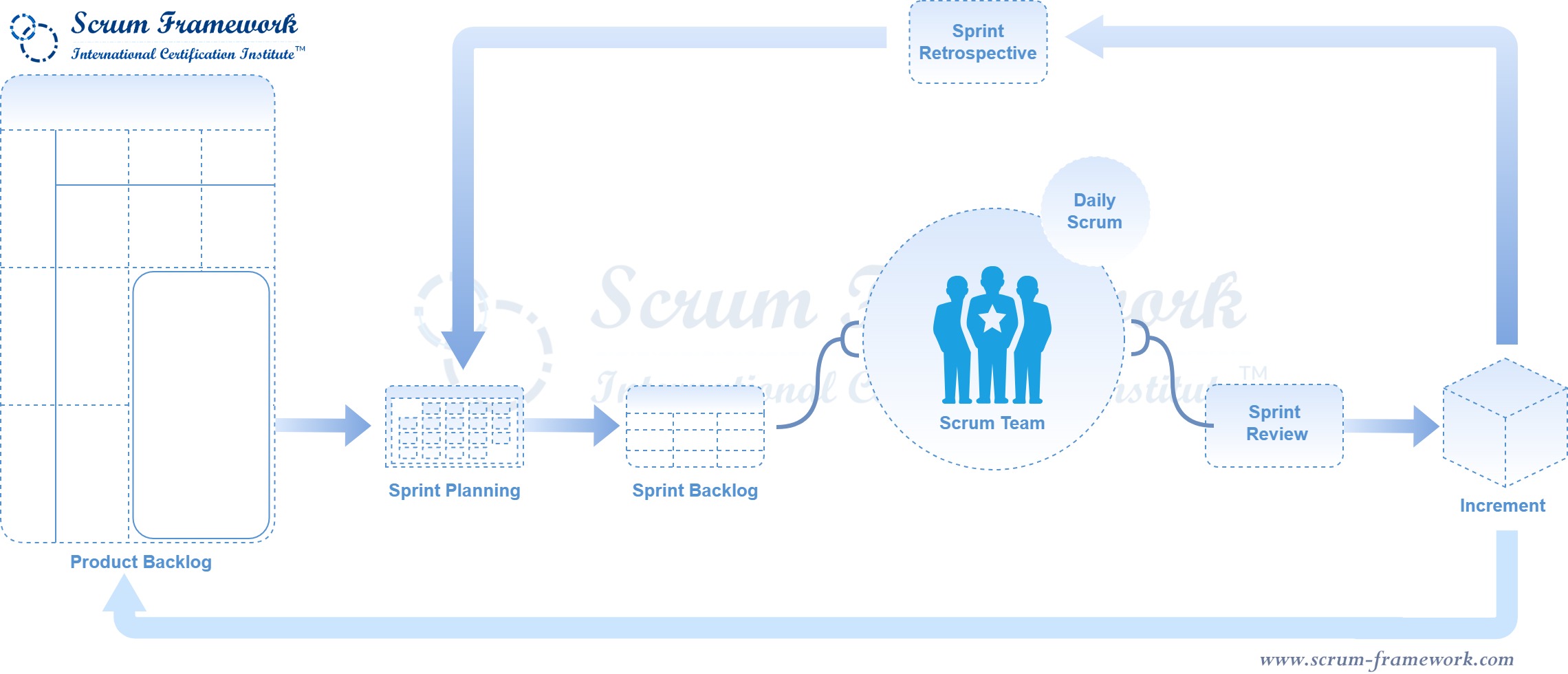
The Scrum framework is built upon several key principles that guide its implementation and effectiveness.
These principles include:
- Empirical Process Control: Scrum is based on the empirical approach, which means it relies on observation, inspection, and adaptation to guide decision-making throughout the project. It acknowledges that knowledge and solutions evolve over time, and encourages teams to make decisions based on real-time information and feedback.
- Self-Organization: Scrum teams are self-organizing, meaning they have the autonomy to determine how to best accomplish their goals. They collaborate and collectively decide on the best approach to deliver value and meet the project objectives. This principle empowers teams to take ownership and responsibility for their work.
- Iterative Development: Scrum employs an iterative approach, dividing the project into short iterations called Sprints. Each Sprint focuses on delivering a potentially shippable product increment. Iterative development allows for frequent inspection and adaptation, enabling teams to respond to changing requirements, incorporate feedback, and continuously improve the product.
- Collaboration: Collaboration is a fundamental principle of Scrum. It emphasizes the importance of communication and collaboration among the Product Owner, Development Team, and Scrum Master. Close collaboration ensures shared understanding, alignment, and effective decision-making throughout the project.
These principles provide the foundation for Scrum's success in managing complex projects. By embracing empirical process control, enabling self-organization, emphasizing iterative development, and fostering collaboration, Scrum promotes flexibility, adaptability, and value delivery.